Big wonders.
Small discoveries.
Meet slow movers, remarkable sprinters and companions who share our lives. Every graphic has readable data, measurement notes and source links. Checked 28 October 2026.
Life in the slow lane
Some of the world’s slow-moving animals
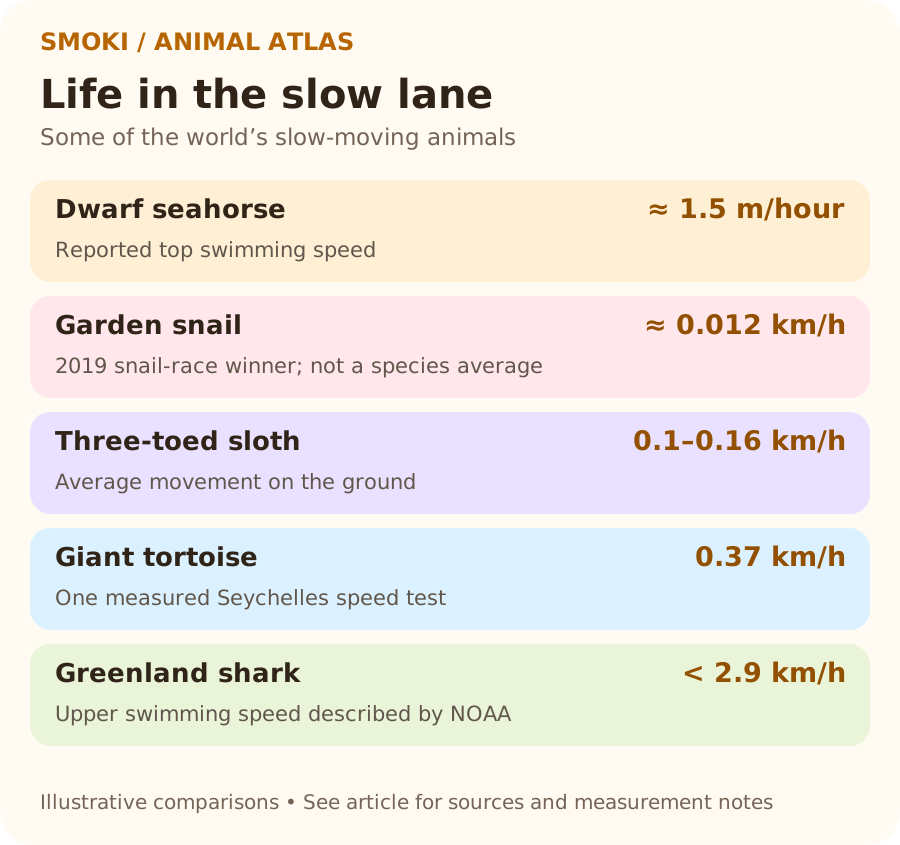
Examples, not a universal ranking. Swimming, ground movement, race results and test speeds are different measurements. Animals that stay attached to a surface are not included.
| Animal / measure | Figure | Context & source |
|---|---|---|
| Dwarf seahorse | ≈ 1.5 m/hour | Reported top swimming speed Source ↗ |
| Garden snail | ≈ 0.012 km/h | 2019 snail-race winner; not a species average Source ↗ |
| Three-toed sloth | 0.1–0.16 km/h | Average movement on the ground Source ↗ |
| Giant tortoise | 0.37 km/h | One measured Seychelles speed test Source ↗ |
| Greenland shark | < 2.9 km/h | Upper swimming speed described by NOAA Source ↗ |
Fast feet, short bursts
Selected fast animals on land
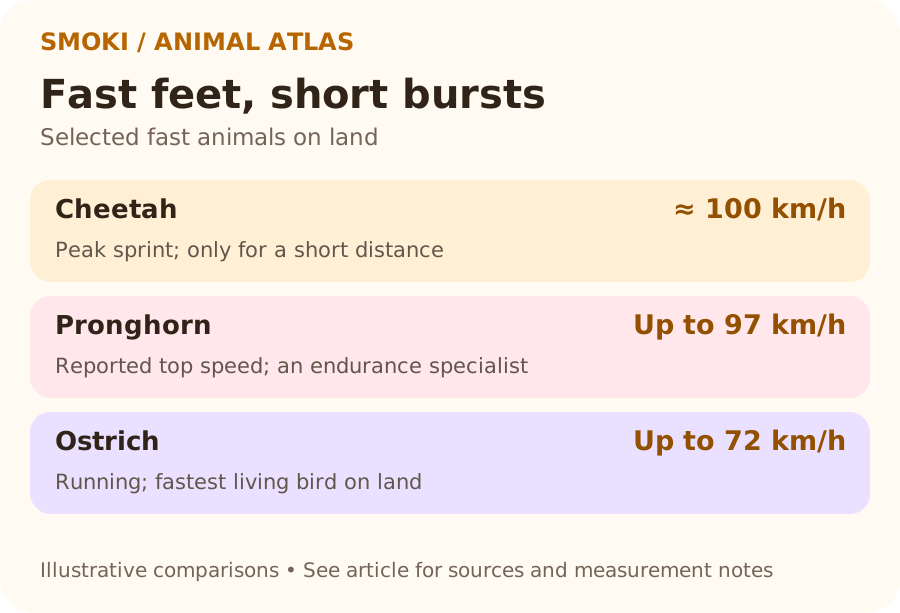
These are selected examples, not a complete top-three ranking. Surface, distance and measurement method affect the result.
Speed needs context
Air and land records are different
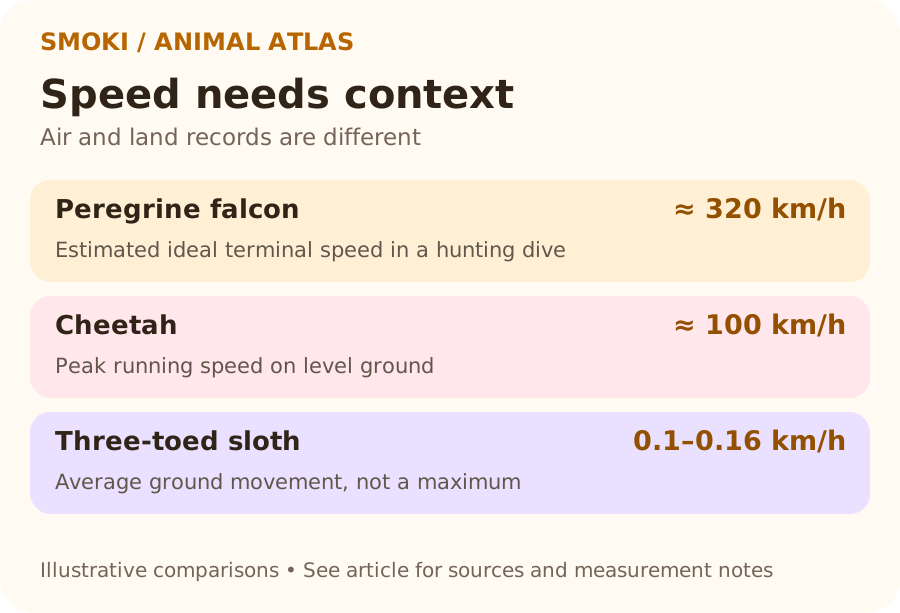
A gravity-assisted dive cannot be treated as equivalent to level flight or running. Published sailfish speeds in viral graphics are not included here without a comparable verified measurement.
| Animal / measure | Figure | Context & source |
|---|---|---|
| Peregrine falcon | ≈ 320 km/h | Estimated ideal terminal speed in a hunting dive Source ↗ |
| Cheetah | ≈ 100 km/h | Peak running speed on level ground Source ↗ |
| Three-toed sloth | 0.1–0.16 km/h | Average ground movement, not a maximum Source ↗ |
A lifetime of care
Typical lifespans of selected pets
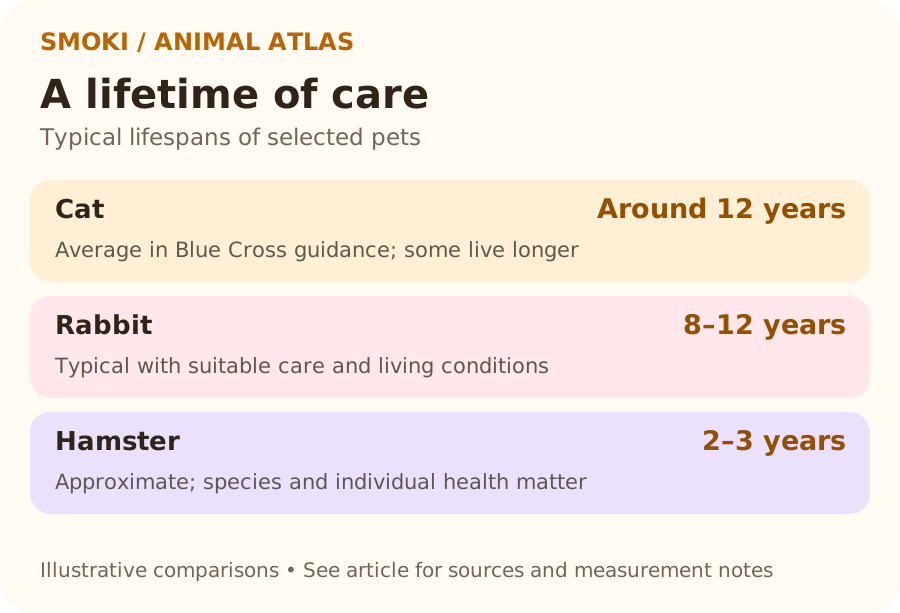
These are guidance figures, not guarantees or maximum-age records. Genetics, environment and healthcare all affect lifespan. A record age is not an average.
| Animal / measure | Figure | Context & source |
|---|---|---|
| Cat | Around 12 years | Average in Blue Cross guidance; some live longer Source ↗ |
| Rabbit | 8–12 years | Typical with suitable care and living conditions Source ↗ |
| Hamster | 2–3 years | Approximate; species and individual health matter Source ↗ |
Pets around the world
A verified regional snapshot: Europe
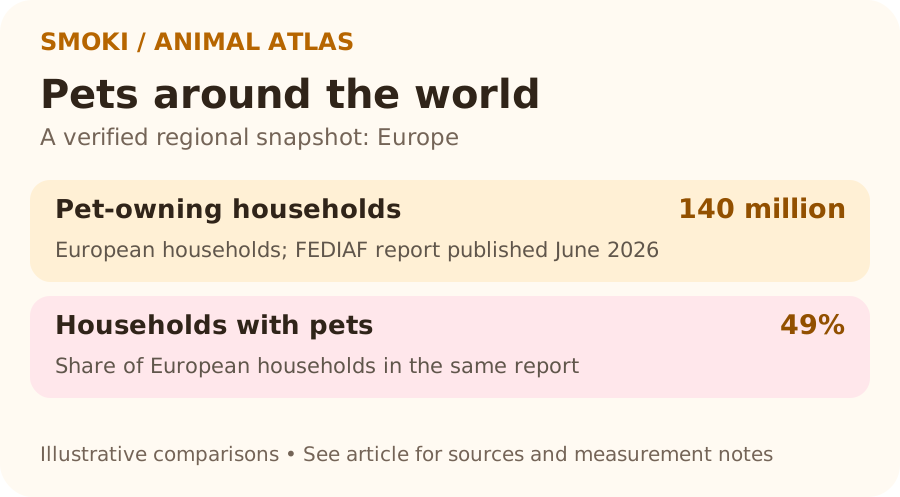
This is European data, not a global animal census. Worldwide totals in the supplied reference are not reproduced as verified facts. Counts of aquaria, individual fish, owned pets and free-roaming animals must not be combined as if they measure the same thing.
Wildlife belongs in its natural habitat. These comparisons are educational and are not recommendations to keep wild animals as pets.
Explore animal-care guides →